

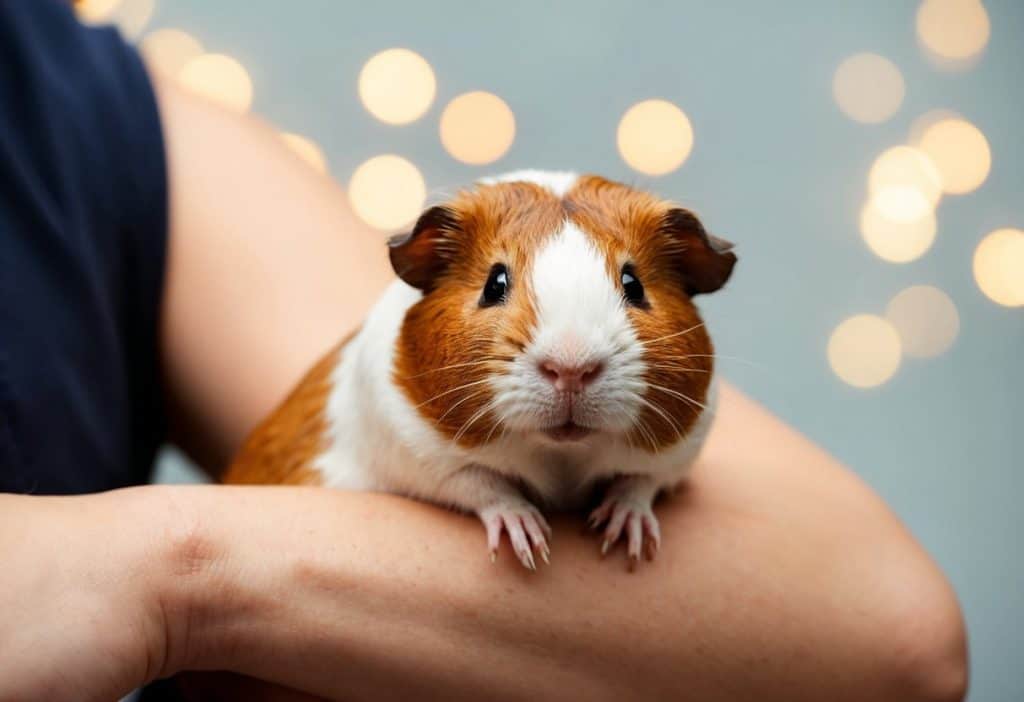
Guinea pigs can enjoy being held when they trust their owners. These small pets need time to get comfortable with handling. Most guinea pigs will tolerate or even like being held once they feel safe and secure with a person.
Building trust is key to having a guinea pig that likes being picked up. Owners should use gentle movements and positive reinforcement. Treats and soft voices help guinea pigs associate handling with good experiences.
Reading a guinea pig’s body language shows if it likes being held. Relaxed muscles, closed eyes, and happy noises are good signs. Squirming, tensing up, or trying to hide mean the guinea pig is not comfortable. With patience and care, many guinea pigs learn to enjoy cuddle time with their humans.
Understanding Guinea Pig Behavior
Guinea pigs have unique ways of communicating and interacting with their environment. Their behavior is influenced by factors like socialization, body language, and vocalizations. Learning to interpret these cues can help owners better care for their pets.
Socialization and Its Impact
Guinea pigs are social animals. They thrive on interaction with other guinea pigs and humans. Regular handling from a young age helps them feel more comfortable being held.
Proper socialization reduces stress and fear in guinea pigs. It makes them more likely to enjoy being picked up and cuddled. Well-socialized guinea pigs are often calmer and more confident.
Owners should spend time with their pets daily. This helps build trust and strengthens the bond between guinea pig and human. Gentle petting, offering treats, and talking softly can all aid in socialization.
Significance of Body Language
Guinea pigs use body language to express their feelings and needs. Watching for these signs helps owners understand their pets better.
A relaxed guinea pig will have a calm posture with its body stretched out. When happy or content, they may “popcorn” – jumping straight up in the air. Frightened guinea pigs might freeze in place or try to hide.
Eyes can also reveal a lot. Wide, alert eyes often show curiosity or excitement. Half-closed eyes usually mean the guinea pig feels safe and comfortable.
Ear position is another important cue. Forward-facing ears indicate interest or alertness. Flattened ears against the head might signal fear or aggression.
Vocalizations: Interpreting Guinea Pig Sounds
Guinea pigs make various sounds to communicate. Each vocalization has a specific meaning.
Whistling or “wheaking” is often a sign of excitement or a request for food. Purring can indicate contentment when being petted. But a lower-pitched purr might signal annoyance or fear.
Teeth chattering is a warning sound. It means the guinea pig is angry or feeling threatened. Squealing usually means the animal is in pain or very scared.
Chirping is a rarer sound. Its exact meaning isn’t fully understood, but it might be linked to stress or mating behavior.
Learning these sounds helps owners respond to their pets’ needs more effectively. It also strengthens the bond between guinea pig and human.
The Human-Guinea Pig Bond
Building a strong bond with your guinea pig takes time and patience. A good relationship is based on trust, positive experiences, and rewards.
Building Trust with Your Pet
Guinea pigs are shy by nature. To build trust, start slow. Let your pet get used to your presence before trying to handle them. Sit near the cage and talk softly. This helps them become familiar with your voice.
Offer your hand for them to sniff. Don’t force interaction. Let your guinea pig approach you on their own terms.
Once they seem comfortable, try gentle petting. Start with short sessions and gradually increase the time. Always move slowly to avoid startling them.
Consistency is key. Spend time with your pet every day. This routine helps them feel safe and builds a stronger bond.
Creating Positive Associations
Make interactions fun for your guinea pig. Use soft bedding or a cozy blanket when holding them. This creates a safe, comfy space.
Play gentle music or nature sounds during bonding time. Calm sounds can help relax your pet.
Brush your guinea pig gently. Many enjoy this and it’s a great way to bond. Use a soft brush made for small animals.
Provide toys and play together. Rolling a ball or offering a chew toy can be fun for both of you.
Never scold or punish your pet. This can damage trust. Stay patient and keep all experiences positive.
The Role of Treats in Bonding
Treats are a powerful tool for bonding. They show your guinea pig that good things happen when you’re around.
Use healthy treats like small pieces of veggies. Carrots, cucumber, and bell peppers are often favorites.
Offer treats by hand to create a link between you and good food. This helps your pet look forward to your presence.
Don’t overdo it with treats. Too many can lead to health issues. Use them sparingly as rewards for positive interactions.
Try hiding treats in toys or bedding. This creates fun games you can play together, strengthening your bond.
How to Properly Handle Guinea Pigs
Guinea pigs can be held safely with the right techniques. Proper handling keeps them calm and prevents injuries. Learning to hold them correctly builds trust between you and your pet.
Basic Handling Techniques
Start by placing a towel on your lap. This gives your guinea pig a soft surface to sit on. Gently scoop up your pet with both hands. Support its bottom and chest. Keep it close to your body.
Hold your guinea pig at chest level. This makes it feel secure. Use one hand to support its back legs. Place the other hand on its chest. Don’t squeeze too tightly.
Let your guinea pig settle before moving around. Talk softly to help it relax. Keep handling sessions short at first. Gradually increase the time as your pet gets used to being held.
Ensuring Comfort and Safety
Create a calm environment for handling. Pick a quiet spot away from loud noises. Sit down when holding your guinea pig. This reduces the risk of dropping it.
Never grab your pet from above. This can scare it. Instead, approach from the side. Move slowly and gently. Allow your guinea pig to see your hands before picking it up.
Keep other pets away during handling time. Dogs or cats might startle your guinea pig. Make sure children know how to hold the pet safely. Supervise young kids when they interact with guinea pigs.
Recognizing Signs of Anxiety
Watch for signs that your guinea pig is stressed. It may freeze, squirm, or try to hide. Squealing or chattering teeth can mean it’s scared. If you notice these signs, put your pet back in its cage.
Some guinea pigs may nip when anxious. This doesn’t mean they’re mean. It’s a sign they’re scared and want to be put down. Respect your pet’s feelings and give it space.
With patience, most guinea pigs learn to enjoy being held. If your pet seems nervous, try offering a treat. This can help it associate handling with positive experiences. Always be gentle and your guinea pig will grow more comfortable over time.
Optimizing Your Guinea Pig’s Environment
Guinea pigs need a safe and comfortable home to thrive. A good environment allows them to feel secure and express natural behaviors.
Start with a spacious cage. Each guinea pig needs at least 7.5 square feet of floor space. Bigger is always better.
Add soft bedding like fleece or paper-based materials. Change it regularly to keep the habitat clean and odor-free.
Provide hiding spots. Guinea pigs enjoy cozy areas to rest and feel protected. Use small boxes, tunnels, or store-bought hideaways.
Include plenty of toys for mental stimulation. Offer items to chew on, like wood blocks or cardboard tubes. This helps keep their teeth healthy.
Set up a separate feeding area with food bowls and a water bottle. Place them away from the bathroom area for cleanliness.
Create different levels in the cage using ramps or platforms. This adds interest and gives guinea pigs more space to explore.
Make sure the cage is in a quiet spot away from loud noises and drafts. Guinea pigs prefer calm environments.
Offer fresh hay daily. It’s crucial for their diet and gives them something to burrow in.
Clean the cage thoroughly once a week. Spot clean daily to maintain a healthy living space.
Fostering Positive Reinforcement
Guinea pigs can learn to enjoy being held through positive reinforcement. This method uses rewards to encourage desired behaviors.
Treats are a great way to start. Offer small pieces of vegetables or fruits when picking up your guinea pig. This creates a positive association with being held.
Gentle petting and soft speaking also help. Use a calm voice and stroke your guinea pig’s fur while holding them. This can make the experience more pleasant.
Keep handling sessions short at first. Start with just a few minutes and gradually increase the time. This helps prevent stress and builds comfort slowly.
Consistency is key. Try to handle your guinea pig daily at the same time. This creates a routine they can expect and look forward to.
Always let your guinea pig approach you first. Place your hand in their cage and let them sniff or climb on it. This builds trust and reduces fear.
Never force a guinea pig to be held. If they seem uncomfortable, gently put them back in their cage. Respect their boundaries to maintain a good relationship.
With patience and positive reinforcement, many guinea pigs grow to enjoy being held. It takes time, but the bond formed is worth the effort.
Frequently Asked Questions
Guinea pig owners often have questions about holding and interacting with their pets. Here are some common concerns and helpful tips for building a bond with these furry friends.
How can you tell if a guinea pig enjoys being held?
A relaxed guinea pig will sit calmly in your hands or lap. They may make soft purring sounds or close their eyes. Some guinea pigs will seek out their owners for cuddles.
What signs indicate that a guinea pig does not want to be held?
Squealing, squirming, or trying to escape are clear signs a guinea pig is uncomfortable. They may also freeze up, hide their face, or nip at fingers when picked up.
How often should guinea pigs be given human interaction and held?
Daily handling helps guinea pigs get used to people. Start with short 5-10 minute sessions. Gradually increase time as the pet becomes more comfortable.
Is it better for guinea pigs to be in pairs for their well-being?
Guinea pigs are social animals. They do best with a companion of their own kind. Pairs or small groups allow them to express natural behaviors and reduce stress.
What are the best practices for holding and cuddling a guinea pig safely?
Support the guinea pig’s whole body when lifting. Hold them close to your chest. Keep one hand under their bottom for extra support. Avoid sudden movements.
Can guinea pigs form emotional attachments with their human caregivers?
With time and gentle handling, many guinea pigs bond with their owners. They may come when called or show excitement at their caregiver’s presence. Building trust takes patience.
Check out Why Is My Guinea Pig Not Eating
Conclusion
Guinea pigs can enjoy being held, but it depends on the individual animal. Many guinea pigs learn to like being picked up when they trust their owners. Building a bond through gentle handling and positive experiences is key.
Some guinea pigs may always prefer to keep four paws on the ground. This is normal and doesn’t mean they don’t like their owners. Respecting each guinea pig’s personality is important.
Proper holding technique helps guinea pigs feel safe. Supporting their whole body and moving slowly reduces stress. Short, frequent handling sessions work best for most guinea pigs.
Patience is essential when getting guinea pigs used to being held. Offering treats and speaking softly can help create positive associations. With time and care, many guinea pigs grow to enjoy cuddle time with their humans.

My name is Everly. I am a Milwaukee-based mom of 2 and have been a proud owner of many hamsters throughout my life. Like many of us, my introduction to hamsters happened when I was very young. My family saw several hamsters come and go through the years, and I enjoyed playing with them, but I never fully appreciated them until I grew up and my own children decided to jump on the hamster bandwagon. At that point, I was determined to learn all I could about caring for these adorable pets. Read more